

Gestão 360º
Descubra o impacto transformador que a Ambiensys pode trazer para o seu negócio.
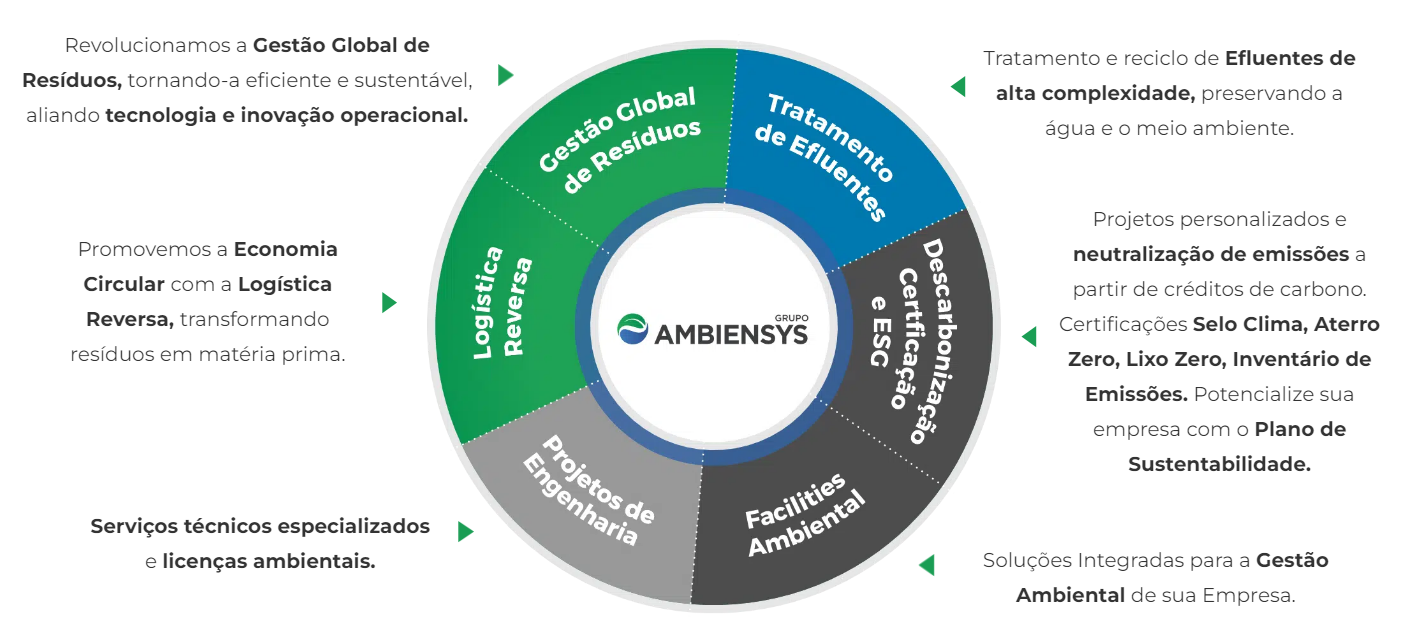
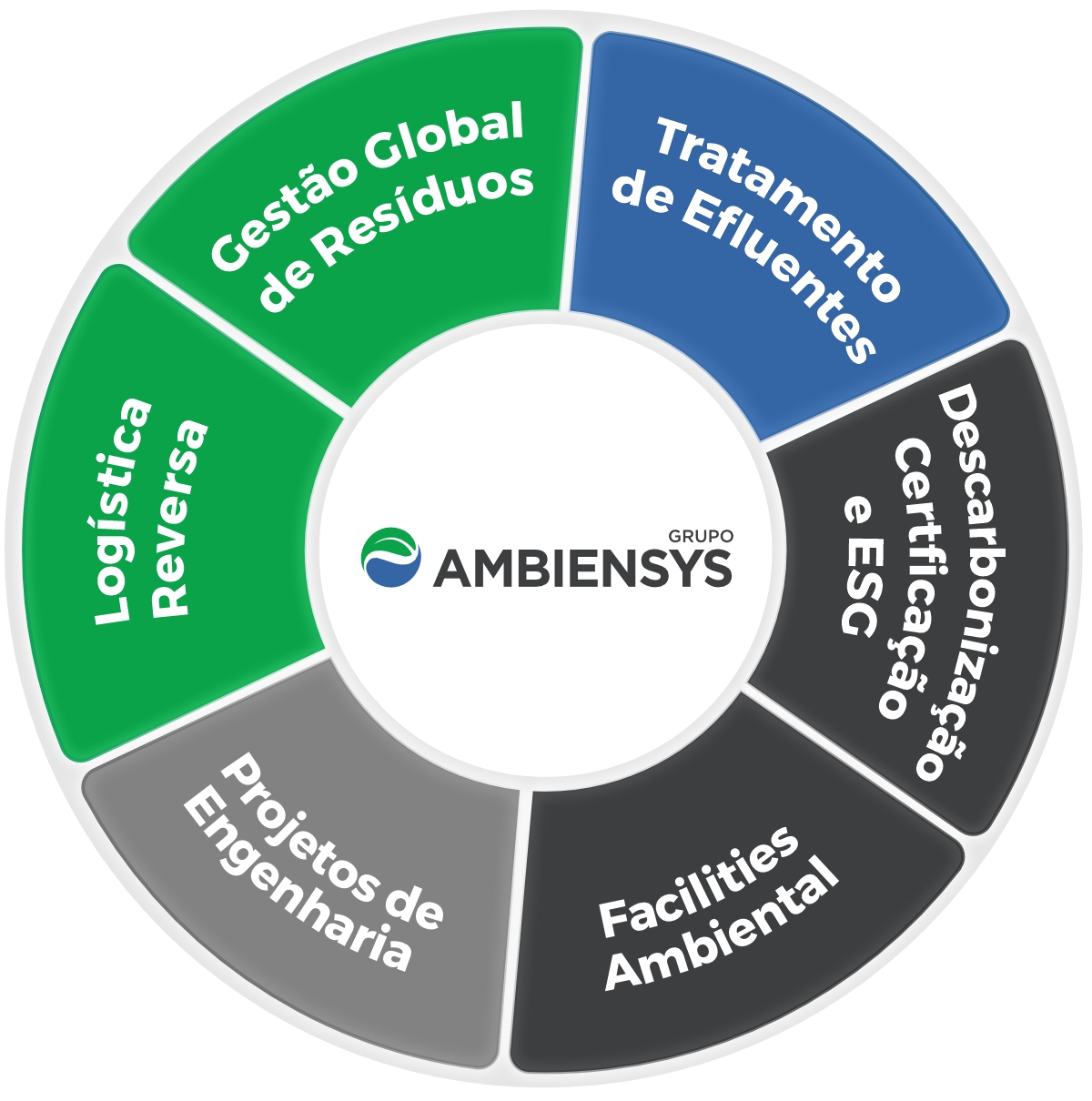

Seu parceiro na gestão ambiental do início ao fim
Desde 1997, o Grupo Ambiensys proporciona soluções inovadoras em gestão, operações, práticas ambientais e engenharia, as quais são ajustadas de acordo com as necessidades particulares de cada cliente.
De qualquer lugar do
Brasil, estamos sempre
perto de você.
Nosso atendimento tem alcance nacional e garante que empresas de diferentes setores contem com uma gestão integrada, eficiente e totalmente alinhada às suas necessidades.
Com uma estrutura moderna e conectada, estamos preparados para transformar desafios em oportunidades, sempre com o mesmo padrão de qualidade e eficiência, esteja você onde estiver.






Seja nosso Parceiro
Ambiensys busca constantemente parcerias para expandir sua atuação e impacto positivo no mundo
Como aumentamos os resultados?
Procedimentos e operações mais eficientes, além de controle de dados para tomada de melhores decisões.
Resultados 2025
Números que demonstram nosso comprometimento com a sustentabilidade e inovação.

+254.000 ton.
Resíduos gerenciados, com 53% desviados de aterros.

26
Estados atendidos

+104.000 ton.
Resíduos reciclados

+203.000
MTR´s gerenciadas

1.400.000 m³
de efluentes tratados

79
Projetos técnicos entregues

+17.000
Pontos de coleta

800 ton. co² Eq
de créditos de carbono comercializados.
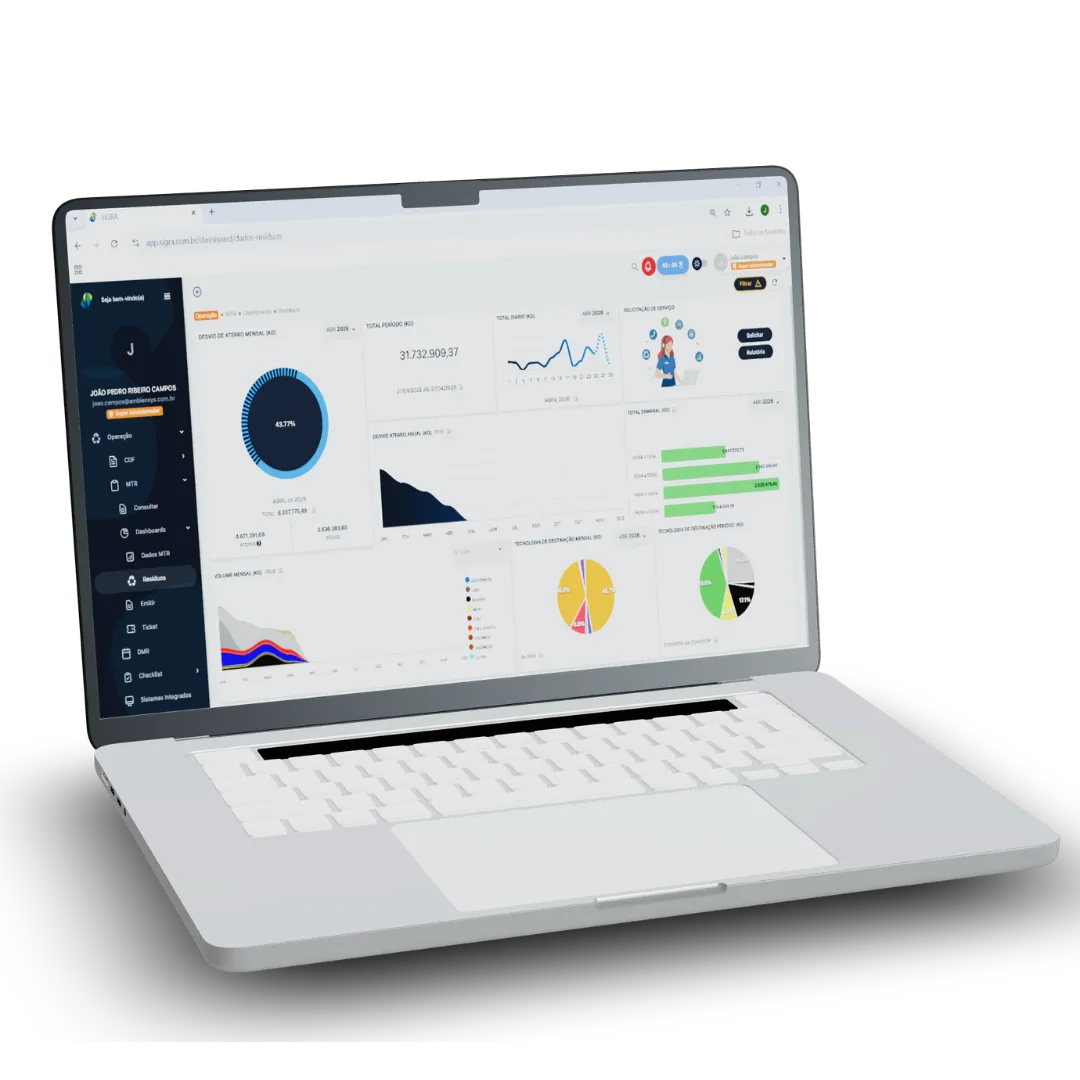

Conectamos tecnologia e inteligência operacional para transformar a forma como as empresas lidam com seus resíduos.
Através do SIGRA, gerencie e controle com facilidade o transporte de resíduos de sua empresa, abrangendo da geração à destinação final.
Com interface simples e intuitiva, crie e emita MTR’s de modo ágil, acompanhando integralmente o processo de transporte e destinação, controle suas documentações e permissões.
O Grupo Ambiensys e suas subsidiárias são especializadas em desenvolver soluções ambientais com viés de execução e eficiência.
Curitiba/PR – Matriz
Av. Cândido de Abreu, 70
5º Andar - Centro Cívico
(41) 3083-8300
Filial
Rio de Janeiro/RJ
(21) 3886-9742
Siga


Certificações

Todos direiros reservados 2026. Grupo Ambiensys. Compliance Ambiensys | Política de Privacidade